
Why Your Car Remote Isn’t Working: A 2026 Guide to Common Problems
Getting locked out of your car is an instant day-ruiner. You’re standing in the parking lot, pressing the unlock button over and over, but nothing happens. It’s frustrating, inconvenient, and always seems to happen when you’re in a hurry.
Whether your remote died suddenly or has been acting up for weeks, you don’t necessarily need an expensive trip to the dealership to fix it. Most of the time, the fix is simple and can be done in minutes. This guide covers the most common reasons car remotes fail, from basic battery swaps to hidden signal interference, and exactly how to get back behind the wheel.
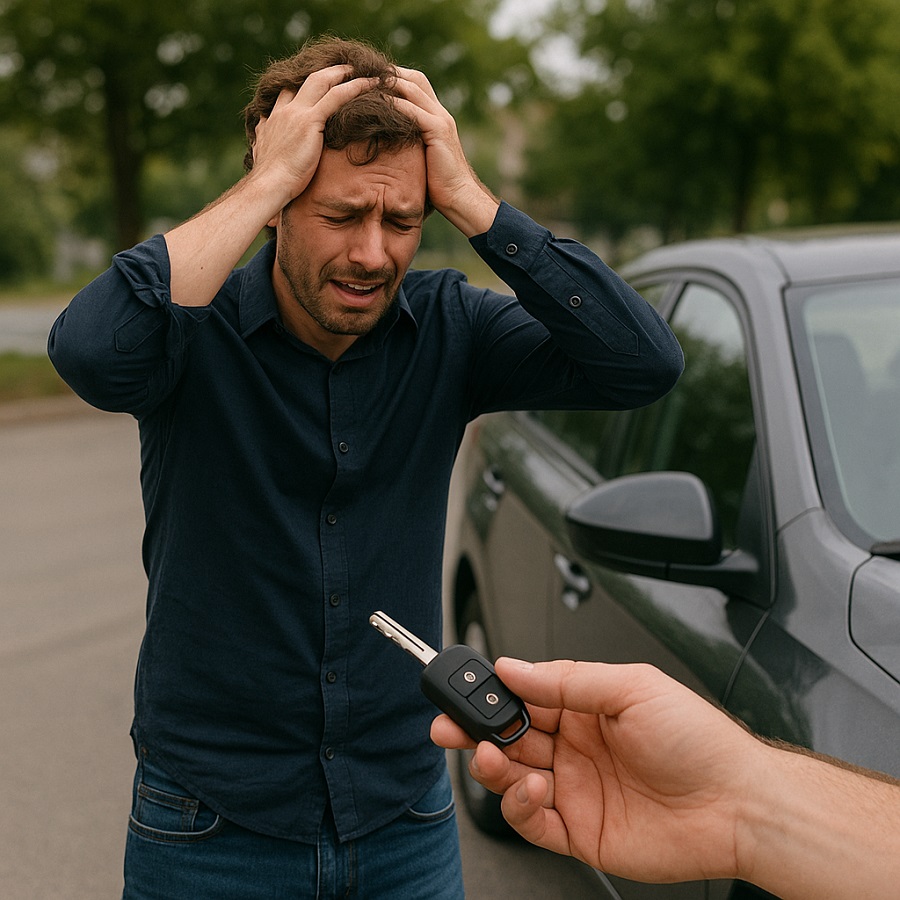
1. Depleted or Low-Voltage Key Fob Battery
A depleted battery is the cause of approximately 90% of unresponsive remotes. If you observe a decrease in effective range or require multiple button cycles to actuate the locks, the battery voltage is likely below the operational threshold.
How Long Do Key Fob Batteries Last?
Most car key fob batteries last anywhere from 2 to 5 years, depending on a few factors:
- How often you use it: The more you lock and unlock your car, the faster the battery drains.
- Type of key fob: Advanced smart keys with passive entry (the ones that stay in your pocket) drain batteries faster—sometimes only lasting 1–3 years—because they are constantly talking to your vehicle.
- Voltage Verification: A healthy CR2032 or CR2025 battery should maintain a nominal 3.0 volts. Using a multimeter, check the cell; any reading below 2.5 volts indicates the battery lacks the necessary current to power the transmitter.
- Weather conditions: Extreme heat, cold, and humidity can shorten the chemical life of the battery.
The Fix: Use the internal emergency key or a precision flat-head tool to separate the housing. Replace the cell, ensuring the correct polarity (+/- orientation), and reassemble the casing.
2. Radio Frequency Interference
This is a huge factor that many people miss. Sometimes your key is working perfectly, but the signal simply can’t reach the car because the “air” is too crowded with other electronic noise.
Common Sources of Interference:
- Cell Phones and Tablets: While it’s a myth that Wi-Fi (2.4 GHz) crashes your key signal (315/433 MHz), your phone can still cause issues. The internal processors and magnets in a smartphone create a local field that can “blind” the car’s receiver if the phone is in the same pocket or hand as the key.
- Radio Towers and Power Lines: High-powered transmitters or electrical substations create massive electromagnetic fields that can drown out your fob’s quiet signal.
- Airports and Military Facilities: These areas use high-wattage transmitters for communication. If you’re parked near a base or a hospital helipad, you might find yourself in a “dead zone.”
The Pro Tip: If you think interference is the issue, try holding the fob closer to the car’s glass or moving your phone to your other side.
3. Physical Damage and Internal Wear
Daily use adds up. Even if the case looks fine, the inside might be struggling.
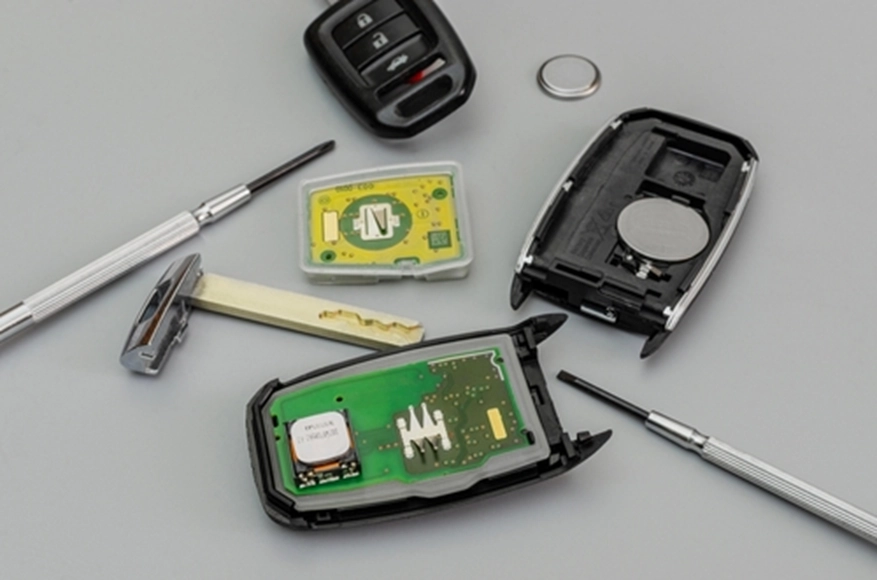
- Broken Buttons: The small tactile switches on the circuit board can snap or get stuck after years of being pressed.
- Internal Circuit Fatigue: Impact from a drop can fracture solder joints on the Printed Circuit Board (PCB) or displace the battery contact terminals.
- Drops: A hard fall on the pavement can knock internal components loose or crack the tiny circuit board inside the plastic.
4. Synchronization and Programming Errors
Vehicle control modules can occasionally lose the encrypted rolling code synchronization with the remote. This typically occurs after a prolonged period with a dead fob battery or if the vehicle’s main battery has been disconnected. Many manufacturers include a manual resynchronization procedure in the owner’s manual that does not require specialized diagnostic tools. This often happens after:
- The battery has been dead for a long time.
- The car’s main battery was disconnected or replaced.
- A software update was performed on the vehicle.
The Fix: Many cars allow you to reprogram the fob yourself. Usually, this involves a specific sequence, like turning the key in the ignition five times or holding the lock button while the door is open. Check your owner’s manual for the “pairing” steps.
5. Receiver and Transmitter Hardware Failure
If a new battery and reprogramming don’t work, an internal component may have failed.
- The Transmitter: This is inside your fob. If it’s weak, the key might only work if you’re touching the window.
- The Receiver: If the vehicle fails to respond to all programmed remotes (including a spare), the Remote Keyless Entry (RKE) module or Body Control Module (BCM) may have a hardware fault or a blown fuse.
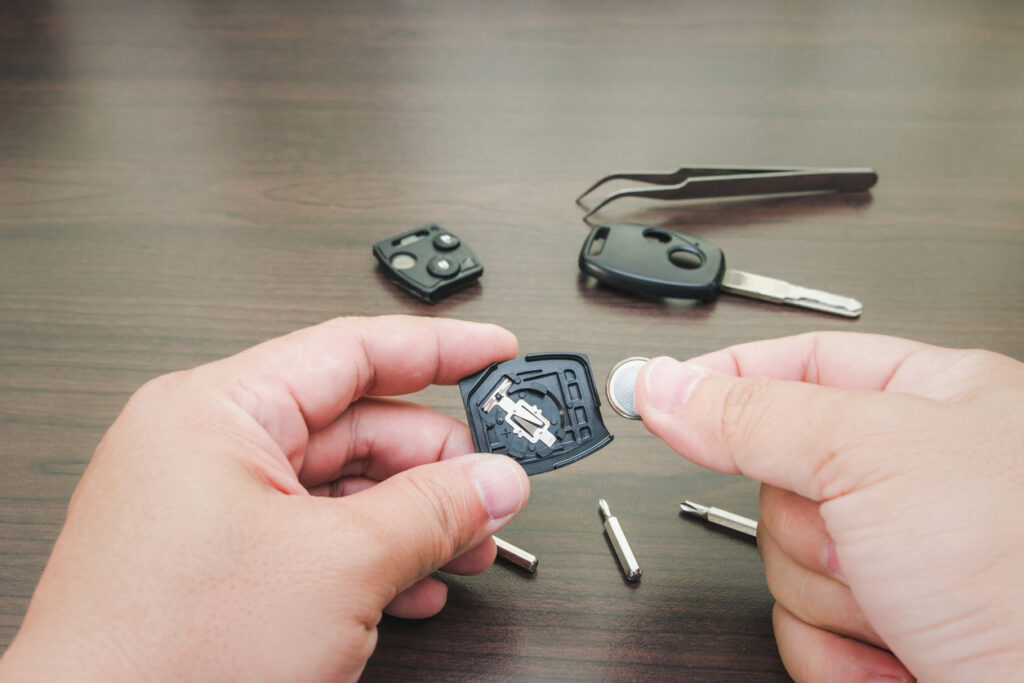
Hand a man change batteries of car key and repair concept on wood table background with screwdrivers and pliers
6. Vehicle-Related Issues
Sometimes the problem isn’t the key at all. If your car battery is weak, the vehicle might shut down the keyless entry system to save power for starting the engine. If the remote isn’t working, check if your interior lights seem dim; it might be time to jump-start the car.
How to Start Your Car with a Dead or Jammed Key
If you are stranded because your fob won’t work, use the Induction Trick.
- Use the Manual Key: Slide the release on your fob to pull out the hidden metal key blade. Use it to manually unlock the door.
- Touch the Button: Even if the fob battery is dead or a radio tower is jamming the signal, you can almost always start the car by pressing the Start/Stop button directly with the tip of the key fob.
- Why it works: This uses a very short-range magnetic connection that bypasses the long-range radio signal. It works even through heavy interference.
Conclusion
A non-working car remote is frustrating, but it’s rarely a total disaster. Most of the time, a $5 battery or simply moving your cell phone to another pocket will solve the problem. If you’ve gone through the steps, replaced the battery, checked for interference, and tried the backup start method- and you’re still stuck, it’s likely time to call a professional locksmith or your dealership.
By staying proactive and swapping your fob battery every few years, you can avoid the stress of being locked out and keep your morning commute running smoothly
FAQs
Why is my car key fob not working even with a new battery?
If a new battery doesn’t fix it, the fob might have lost its programming, or the internal metal contacts are bent and not touching the battery correctly. It could also be a blown fuse inside the car’s keyless entry module.
How do I start my car with a dead key fob?
Use the “Induction Trick.” Pull out the manual metal key hidden inside the fob to unlock the door. Once inside, press the Start/Stop button directly with the nose of the key fob. This works even with a dead battery.
Can a cell phone really block my car key signal?
Yes. It’s not that the signals get mixed up, but the electromagnetic field from your phone can “deafen” the key fob’s transmitter if they are touching. Keep them in separate pockets.
Does cold weather affect my car remote?
Absolutely. Extreme cold slows down the chemical reaction in the coin-cell battery, lowering its voltage. If your fob only works when it’s been warmed up in your hand, the battery is near the end of its life.
How much does it cost to replace a key fob in 2026?
A simple battery swap is under $10. However, a full replacement and programming for a modern smart key usually costs between $150 and $400 depending on the car brand.
Can I program a new key fob myself?
For many older vehicles and some Ford/GM models, yes. However, most modern European and Japanese cars require a professional locksmith’s computer to “flash” the new key into the car’s memory.
Why does my key work at home but not at the grocery store?
This is likely environmental interference. The grocery store might have high-powered security sensors or wireless systems that are creating enough background noise to drown out your fob.
Share
